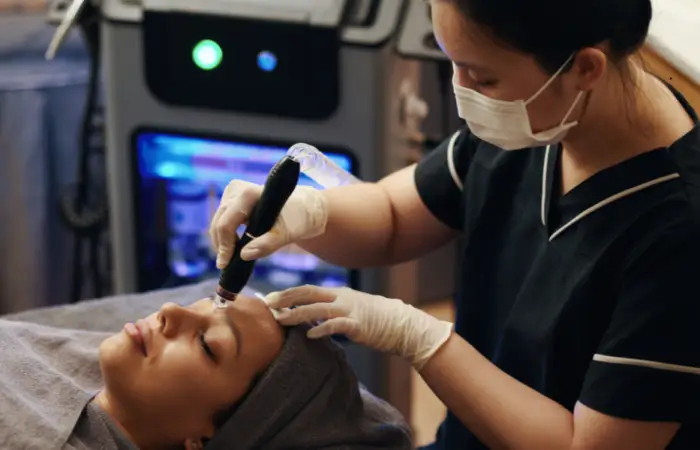
Microneedling has become one of the most requested skin treatments in American med spas, and over the past decade the category has split in two. Traditional microneedling relies on fine needles alone to prompt the skin to rebuild itself. RF microneedling adds radiofrequency energy to the same process, carrying heat into the deeper layers where firmness is lost. At Northville Beauty Spa we offer both, and the question we hear most at consultations is which one makes more sense for a particular face and timeline.
This guide compares EXION RF microneedling with traditional microneedling on the points that matter when you book: how deep each one works, what it treats best, how it feels and how long results take to show.
What Is Traditional Microneedling?
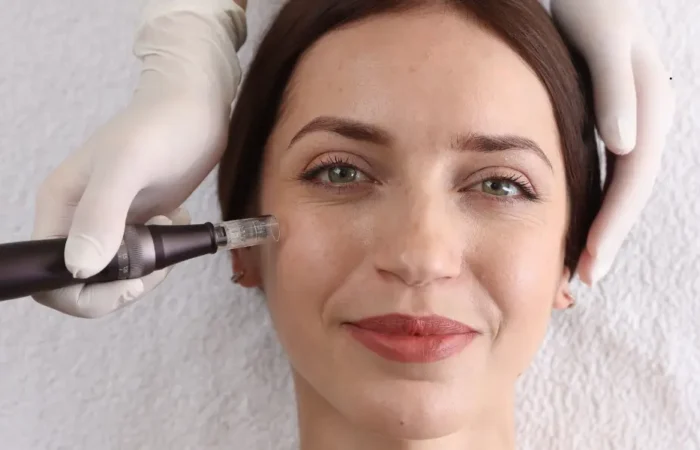
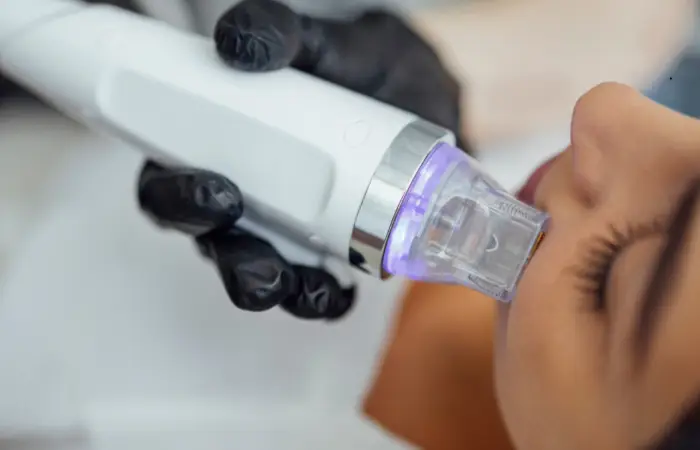
Traditional microneedling, also called collagen induction therapy, is a cosmetic procedure that uses a handheld device fitted with ultrafine needles to create thousands of controlled micro-channels in the skin. Each channel is a tiny, deliberate injury. The body responds with its normal wound healing process, laying down fresh collagen and elastin over the weeks that follow.
Plastic surgeons began experimenting with deliberate skin needling in the 1990s. Early tools were stamps and drum-shaped rollers, and most clinics now use motorized pens that move the needles in a rapid vertical motion at a depth the provider sets, ranging from a fraction of a millimeter to roughly two and a half millimeters on the face.
At Northville Beauty Spa, traditional treatments are performed with SkinPen, the first microneedling device to receive FDA clearance, which is indicated for facial acne scars in adults 22 and older. You can learn more about the device and its protocol on our SkinPen microneedling in Northville, MI page. Because traditional microneedling works purely by mechanical stimulation, its results depend largely on needle depth and on how consistently the skin is treated over a full series.
What Is EXION RF Microneedling?
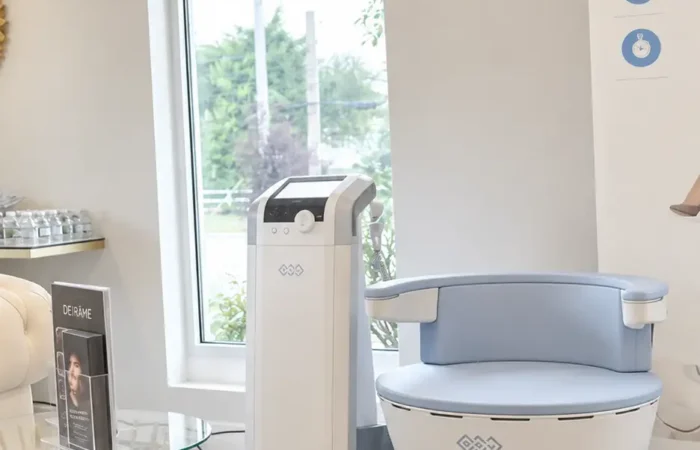
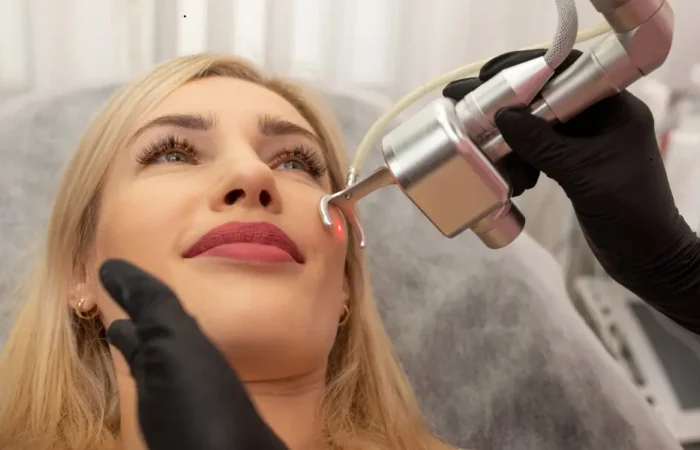
EXION RF microneedling is a fractional radiofrequency treatment developed by BTL Aesthetics, the company behind Emsculpt Neo and Emsella. It combines microneedles with monopolar radiofrequency energy, so the skin receives a mechanical stimulus and a controlled dose of heat in the same pass. That heat reaches the dermis, the thick middle layer of skin where collagen and elastin fibers give the face its structure.
What distinguishes EXION from earlier RF microneedling platforms is its use of artificial intelligence. The system monitors how the skin responds during treatment and adjusts energy output as the applicator moves, which keeps heating consistent across areas that differ in thickness, such as the cheek and the jawline. The energy is designed to reach deep layers without the needles being inserted to their full depth, one reason many patients find the treatment more comfortable than they anticipated.
As Michigan’s first BTL Aesthetics Center of Excellence, Northville Beauty Spa brings deep familiarity with BTL technology to every EXION treatment. Our EXION RF microneedling in Northville, MI page covers treatment areas and what to expect on the day.
How Do the Two Treatments Work Differently in the Skin?
Both treatments start from the same principle. Controlled injury signals the skin to repair itself, and repair means new collagen. The difference lies in what happens once the needle is in place.
With traditional microneedling, the needle is the entire treatment. Collagen production depends on the micro-injury alone, which makes the method well suited to surface texture and shallow scarring. The effect builds steadily with each session, and results are closely tied to how many sessions a patient completes.
With EXION, the needle also serves as a route for radiofrequency heat. When collagen fibers are warmed to a precise temperature, they contract right away and then continue to remodel for months afterward. This two-stage response explains why RF microneedling tends to produce more noticeable tightening, particularly along the lower face and neck, where laxity usually shows first.
The table below summarizes the practical differences.
Feature | Traditional Microneedling | EXION RF Microneedling |
|---|---|---|
How it works | Needles create micro-channels that trigger collagen repair | Microneedles plus monopolar radiofrequency heat, adjusted in real time by AI |
Depth of effect | Upper and mid dermis, set by needle length | Deeper dermal layers, reached through heat as well as needles |
Best suited to | Surface texture, fine lines, enlarged pores, shallow acne scars | Skin laxity, deeper acne scars, crepey texture, fine lines |
Tightening effect | Mild and gradual | More pronounced, with immediate collagen contraction |
Comfort | Topical numbing usually applied | Often performed without anesthesia |
Typical downtime | Redness for one to two days | Redness and mild swelling for one to two days |
Typical series | 3 to 6 sessions, about four weeks apart | 3 to 4 sessions, about four weeks apart |
When results appear | Gradually, building across the series | Visible improvement in about 4 to 6 weeks |
Skin tones | Suitable for most skin tones | Suitable for all skin types and tones |
Cost per session | Lower | Higher, reflecting the added technology |
Which Concerns Does Each Treatment Address Best?
Fine Lines and Uneven Texture
For early signs of aging and a rough skin surface, traditional microneedling offers excellent value. Patients in their late twenties and thirties who want smoother skin and a more refined pore appearance frequently start here. EXION treats these concerns well too, so the deciding factor is usually whether there is any laxity worth addressing at the same time.
Acne Scars
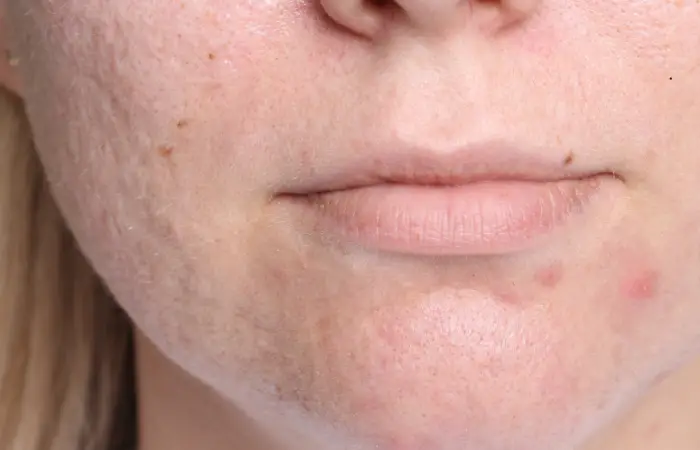
Acne scars form when inflammation damages collagen deep in the skin and the tissue heals unevenly. Shallow rolling scars respond well to traditional microneedling. Deeper rolling and boxcar scars generally need a treatment that reaches further, and radiofrequency is well documented for that purpose. In a 2026 randomized split-face trial, mean scores on a standard acne scar grading scale fell from 54.73 to 30.53 on the side treated with RF microneedling, an improvement statistically comparable to fractional CO2 laser, with faster recovery and fewer pigment-related side effects (Journal of Dermatological Treatment).
For patients who have completed a series of traditional microneedling and reached a plateau, EXION is often the natural next step. Our SkinPen vs. EXION microneedling showdown looks more closely at how each device handles different scar types.
Loose or Crepey Skin
Skin laxity is the clearest dividing line between the two treatments. Traditional microneedling can improve firmness modestly over a long series, though it relies on new collagen alone and lacks the contraction that heat provides. EXION delivers that heat directly into the dermis, which is why it is the option our providers recommend for early jowling and crepey texture on the neck.
Stretch Marks
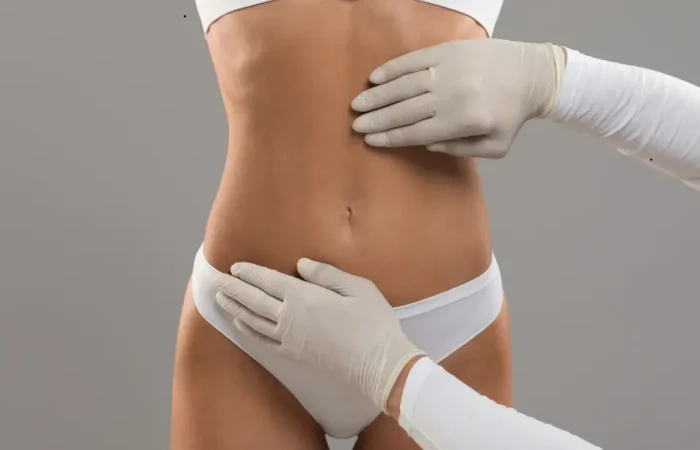
Both treatments can soften stretch marks on the abdomen and thighs. EXION is often preferred for older, silvery marks, because heat stimulates remodeling in tissue that has become thin and lax. Newer pink marks tend to respond to either approach, and your provider can suggest the one that fits the area and your schedule.
How Do Comfort and Downtime Compare?
Traditional microneedling is usually performed after a topical numbing cream has been on the skin for around 30 minutes. Patients describe the sensation as a light scratching or vibration, a little stronger over bony areas like the forehead. Afterward the skin looks mildly sunburned for a day or two and may feel tight and dry while it heals.
EXION is often performed without anesthesia. Most patients feel warmth and brief pressure as the applicator moves, and the real-time energy control keeps sensations predictable from one area to the next. Redness typically settles within a day or two, and many people return to work the same afternoon.
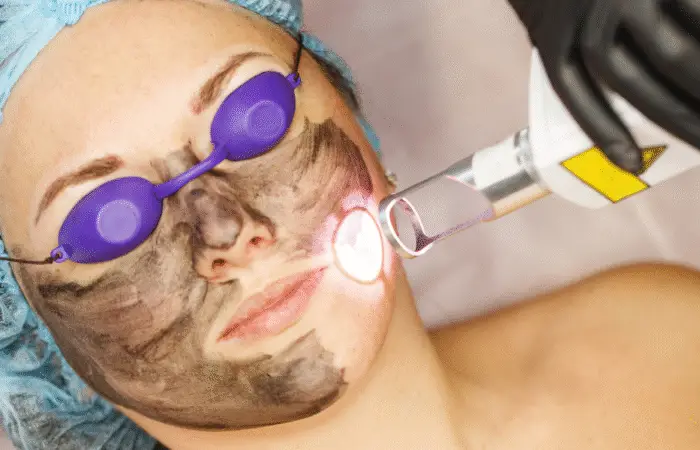
Both options involve a far shorter recovery than ablative lasers such as fractional CO2. For patients who want a stronger resurfacing effect on pigment and tone, MOXI laser resurfacing in Northville offers a gentle laser option that pairs well with a microneedling plan.
Good to know: Fall and winter are ideal seasons to start a microneedling series in Northville. Shorter days mean less sun exposure while the skin is rebuilding, and a series started in autumn gives your collagen time to settle before spring. Daily SPF still matters year round, including on overcast Michigan days.
How Many Sessions Will You Need?
Traditional microneedling is typically planned as a series of 3 to 6 sessions spaced about four weeks apart, since each session builds on the collagen stimulated by the one before. EXION plans are often shorter, commonly 3 to 4 sessions a month apart, because each visit delivers a stronger stimulus.
Visible improvement with EXION generally appears 4 to 6 weeks after treatment, and collagen continues to remodel for several months after the final session. With traditional microneedling, the change is more gradual and becomes clearer toward the end of the series.
Maintenance looks similar for both. Most patients return for a touch-up session once or twice a year to protect the collagen they have built, and sun habits along with natural aging influence how often that is needed.
Who Is a Good Candidate for Each Treatment?
The right choice usually comes down to what you see in the mirror and how much change you are hoping for. As a general guide:
- Traditional microneedling fits best if your priority is smoother texture or softer shallow scarring, and you prefer a lower cost per session.
- EXION RF microneedling fits best if you are starting to notice loose skin or deeper scarring, and you want visible tightening from a shorter series.
Both treatments suit a wide range of skin tones, since they rely on mechanical stimulation and radiofrequency rather than light that targets pigment. Patients with active breakouts or infections in the treatment area wait until the skin has cleared, and anyone who is pregnant or has recently taken isotretinoin should discuss timing with a provider first. Because EXION uses radiofrequency, patients with pacemakers or metal implants near the treatment area are screened beforehand.
Can You Combine EXION With Other Treatments?
EXION pairs well with treatments that work on a different layer or toward a different goal. A HydraFacial in Northville, MI before or between sessions clears congestion and restores hydration, which helps the skin look its best while collagen rebuilds. For patients who also want lift from underneath, EXION can be planned alongside Emface in Northville, MI, a needle-free BTL treatment that tones the facial muscles supporting the skin.
Some patients also move between the two forms of microneedling over time. A common pattern is an EXION series to address laxity and deeper scarring, followed by periodic SkinPen sessions to maintain texture at a lower cost.
Consultation tip: Bring a few photos of yourself from five or ten years ago. They help your provider see where firmness has changed, which makes it easier to decide whether your skin needs heat-based tightening or surface renewal.
How Do You Decide Between EXION and Traditional Microneedling?
A practical way to frame the choice is to ask whether your concern sits on the surface or below it. Uneven texture and mild scarring live close to the surface, and traditional microneedling handles them efficiently at a lower price per visit. Looseness and deep scars originate in the dermis, and EXION’s heat reaches that layer more effectively.
Budget and time factor in as well. EXION costs more per session, though its shorter series can narrow the gap in total investment. Traditional microneedling offers a lower entry point for patients who want to see how their skin responds before committing to an energy-based treatment.
The most reliable answer still comes from an in-person skin assessment. Our providers examine laxity and scar depth up close and recommend the treatment, or combination of treatments, that fits your goals.
Frequently Asked Questions
EXION is the stronger option for laxity and deeper scarring because it adds radiofrequency heat. For surface texture and early fine lines, traditional microneedling delivers very good results at a lower cost, so the better choice depends on your concern.
Most patients find EXION comfortable, and many complete it without numbing cream. The sensation is usually described as warmth with light pressure.
Most patients can apply mineral makeup the following day once the skin has settled. Your provider will give you aftercare instructions specific to your treatment.
Yes. Many patients start with SkinPen and move to EXION when they want more tightening. A gap of about four weeks between treatments is typical, and your provider will confirm the timing.
Yes. EXION is suitable for all skin types and tones, since radiofrequency energy works through heat in the dermis rather than through pigment absorption.
Your Next Step
Choosing between EXION and traditional microneedling becomes much simpler once a provider has looked closely at your skin. At Northville Beauty Spa, we offer both treatments and build each plan around your skin and your calendar.
Book your consultation today and find out which microneedling approach will give you the results you are after.
References
Alster TS, Graham PM. Microneedling: A Review and Practical Guide. Dermatologic Surgery. 2018;44(3):397-404. PubMed
Emam AAM, Nada HA, Atwa MA, Tawfik NZ. Split-face comparative study of fractional Er:YAG laser versus microneedling radiofrequency in treatment of atrophic acne scars, using optical coherence tomography for assessment. Journal of Cosmetic Dermatology. 2022;21(1):227-236. PubMed
Comparative efficacy, recovery, and pigmentary safety of radiofrequency microneedling and fractional carbon dioxide laser for facial atrophic acne scars: a prospective randomized split-face trial. Journal of Dermatological Treatment. 2026;37(1):2687842. PubMed